

Spasticity is a condition that causes certain muscles to feel stiff, tight, or difficult to move. It can make everyday activities harder, including walking, getting dressed, reaching for objects, opening the hand, transferring from a chair, or maintaining comfort throughout the day.
For some people, spasticity feels like mild tightness. For others, it can cause painful spasms, abnormal posture, limited range of motion, or difficulty with basic daily care. The pattern is different for every person, which is why spasticity treatment should be personalized.
At Spasticity & Movement Partners, we help patients and families understand what is happening, why it is happening, and what can be done to improve comfort, movement, and quality of life.
Muscles normally rely on clear communication between the brain, spinal cord, nerves, and muscles. These signals help muscles tighten when they need to work and relax when they need to move smoothly.
Spasticity happens when those signals are disrupted. This usually occurs because of an injury or condition affecting the brain or spinal cord. When the communication system is interrupted, certain muscles may stay too active, tighten too much, or resist movement.
Spasticity is commonly seen in people with neurologic conditions such as:
Spasticity can affect the arms, hands, legs, feet, neck, or trunk. It may involve one muscle group or several areas of the body.

Spasticity does not look or feel the same for everyone. Some patients notice tightness only during certain movements. Others may feel stiffness even at rest.
Common signs of spasticity include:
Spasticity can also change over time. It may worsen with pain, stress, fatigue, infection, skin irritation, constipation, poor sleep, or medication changes. This is one reason a detailed evaluation is important. Sometimes the issue is not just the muscle tightness itself, but what is triggering or worsening it.
Spasticity is not just a muscle problem. It affects function, comfort, independence, and quality of life. When spasticity is left untreated, it can contribute to pain, reduced range of motion, difficulty with positioning, skin problems, hygiene challenges, falls, and long-term joint stiffness or contractures. It can also make therapy and daily care more difficult.
The right treatment plan begins with understanding how spasticity is affecting the patient’s real life. For one person, the goal may be walking more safely. For another, it may be opening the hand for hygiene, reducing pain, improving sleep, making dressing easier, or decreasing the physical burden on a caregiver.
At Spasticity & Movement Partners, the evaluation focuses on the full picture, including:
Clinical focus
The goal is not simply to loosen a muscle. The goal is to build a plan that supports meaningful movement, comfort, and function.
Spasticity treatment is most effective when it is tailored to the person. There is no one-size-fits-all approach. Many patients benefit from a combination of therapies, medications, targeted procedures, and ongoing reassessment.
Physical and occupational therapy are often important parts of spasticity care. Therapy may focus on stretching, strengthening, positioning, balance, walking, transfers, splinting, bracing, or improving the ability to perform daily tasks.
Therapy can also help patients maintain range of motion, prevent worsening stiffness, and work toward practical functional goals.
Some patients benefit from oral medications that reduce muscle stiffness or spasms, especially when spasticity is more widespread. Common medications may include baclofen, tizanidine, or diazepam.
These medications can be helpful, but they need to be managed carefully. Side effects such as drowsiness or weakness can interfere with function. The goal is to find the right balance between reducing stiffness and preserving strength, alertness, and independence.
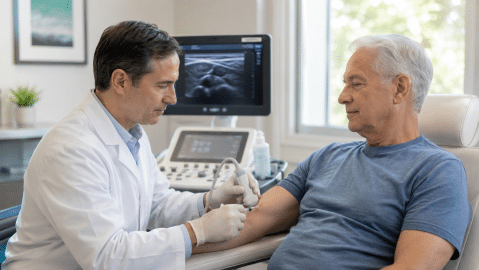
For spasticity that affects specific muscles, targeted injections may be recommended. These treatments can help reduce overactivity in selected muscles that are causing pain, stiffness, abnormal positioning, or functional limitations.
At Spasticity & Movement Partners, targeted procedures may include:
These procedures are used to address specific muscle groups and are performed with ultrasound and/or EMG guidance for precision. The goal is to treat the muscles or nerves that are most responsible for the patient’s symptoms while supporting the patient’s broader functional goals.
Sometimes it is not clear how much of a movement problem is caused by active spasticity versus a fixed contracture or joint limitation. A diagnostic nerve block can help answer that question.
A short-acting anesthetic may be used to temporarily reduce nerve activity in a specific area. This can help the care team understand whether a longer-lasting treatment may be useful and what kind of improvement may be possible.
For patients with severe or widespread spasticity that is not well controlled with oral medications or focal treatments, intrathecal baclofen therapy may be considered. This involves delivery of baclofen directly into the spinal fluid through an implanted pump.
This approach can provide more targeted tone management for select patients. Spasticity & Movement Partners provides pump refills, dose adjustments, troubleshooting, and coordination with neurosurgical teams when needed.
Spasticity care often works best when the plan is coordinated across specialties. This may include collaboration with physical therapists, occupational therapists, neurologists, orthopedic surgeons, neurosurgeons, primary care providers, and caregivers.
A strong plan connects medical treatment with real-life function. That may mean walking to the mailbox, improving hand hygiene, sitting more comfortably, reducing pain, getting dressed with less assistance, or making daily care easier for a loved one.
Progress in spasticity care should be measurable and meaningful. It is not only about whether a muscle feels looser. It is about whether the patient can do something better, more comfortably, or more independently.
At Spasticity & Movement Partners, goals are built around what matters most to each patient. These goals may include walking distance, transfer ability, dressing time, hand opening, pain reduction, caregiver ease, hygiene, range of motion, or quality of life.
Progress is tracked over time so the treatment plan can be adjusted based on what is working. Recovery is not always a straight line, but even small gains can be important.
You may benefit from a spasticity evaluation if you or a loved one has muscle stiffness, spasms, pain, abnormal posture, difficulty walking, or increasing challenges with daily care after a neurologic condition or injury.
A specialist can help determine what is causing the stiffness, whether treatment may help, and which options make the most sense for your goals.
Spasticity can feel overwhelming, but it can often be managed with the right plan. The first step is understanding what is happening and how it is affecting your daily life.
At Spasticity & Movement Partners, care is built around partnership, clarity, and measurable progress. We take time to understand your symptoms, your goals, and the life you want to move toward.
If you or someone you love is living with spasticity, schedule a consultation with Spasticity & Movement Partners to begin building a treatment plan that is practical, evidence-based, and centered around what matters most to you.